 UploadUpload URLHotlinkRandomAbout

No rules this time - Just a little history.
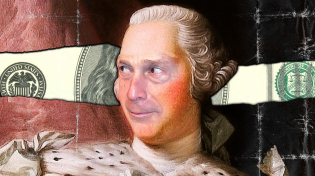
Alexander Hamilton was many things: aide to General George Washington, Secretary of the Treasury, Major General of the U.S. Army, lover, cheater, duelist, musical phenomenon. But few people know his immensely influential role in American free press law—just months before his fatal duel.
Today, we think of libel as defamatory falsehood: false written statements—especially lies, but sometimes honest mistakes—that injure a person's reputation. And we also think of libel as a civil claim; criminal libel prosecutions are very rare.
In 1700s England, though, criminal libel cases were common, and they covered many written statements that harmed a person's reputation even if they were true. Such statements were outlawed in part because they were seen as likely to produce duels. And, when said about government officials, such defamatory statements—again, even if true—were seen as undermining the government's authority. "The greater the truth, the greater the libel," some said.
American law was based on English law, so many Americans assumed American law would take the same view. In the famous colonial-era 1735 John Peter Zenger trial, the defense had argued that truth must be a defense in libel cases. But though the jury acquitted Zenger, such jury decisions set no legally binding precedent.
Enter Alexander Hamilton, in 1803. Thomas Jefferson was President; Hamilton was a prominent New York lawyer. When Harry Croswell, an anti-Jefferson newspaper editor, was prosecuted in New York state court for libeling Jefferson, Hamilton came to Croswell's defense.
Croswell's publication had alleged that Thomas Jefferson had paid another editor, James Callender, to make scurrilous accusations against Washington and Adams. This allegation of Croswell's injured Jefferson's reputation, the prosecution charged, thus making it a libel—without regard to whether it was true. And it also injured the nation, making it a so-called "seditious libel."
Croswell was convicted, after the trial judge instructed the jury that truth was not a defense in libel cases. Croswell appealed, and Hamilton, representing Croswell, argued that truth should have been a defense:
"The Liberty of the Press consists, in my idea, in publishing the truth, from good motives and for justifiable ends, though it reflect on government, on magistrates, or individuals. It is essential to say, not only that the measure is bad and deleterious, but to hold up to the people who is the author, that, in this our free and elective government, he may be removed from the seat of power."
Today, that standard actually would diminish First Amendment protection. At least as to matters of public concern, the Court held in 1964, prosecutors must always prove an alleged libel was false, regardless of whether it was said "from good motives and for justifiable ends." But in 1803, Hamilton's position was a great step towards broader legal protection for criticism of government.
And Hamilton's position swept the nation. Not at first: The New York court split 2 to 2, thus leaving Croswell's conviction standing. But Justice James Kent, who would become one of the most influential judges and legal writers of the early 1800s, endorsed Hamilton's views in his opinion. In 1805, the New York Legislature enacted a statute implementing Hamilton's view that truth was always a defense when published "with good motives and for justifiable ends"—phrasing that Hamilton pioneered. In the decades after that, many state constitutions were framed precisely this way. To this day, 20 state constitutions contain Hamilton's formula.
Hamilton and Justice Kent had become close friends in the years before the Croswell case. While they were in Albany for the court sitting that included the Croswell argument, Hamilton, Kent and a few others had dinner together. Over dinner, Hamilton remarked that he thought Aaron Burr was dangerous and untrustworthy. Burr was at the time planning to run for governor of New York, though he ended up being beaten by Morgan Lewis, the trial judge in Croswell's case.
Another man at the dinner reported on these remarks, which were then referred to in an Albany newspaper. Burr demanded that they be retracted. Hamilton refused. Burr challenged Hamilton to a duel. And Hamilton didn't live to see his view of the freedom of the press become part of American law.
--
Written by Eugene Volokh, who is a First Amendment law professor at UCLA.
Produced and edited by Austin Bragg, who is not.
Additional graphics by Joshua Swain
This is the ninth episode of Free Speech Rules, a video series on free speech and the law. Volokh is the co-founder of The Volokh Conspiracy, hosted at Reason.com.
This is not legal advice.
If this were legal advice, it would be followed by a bill.
Please use responsibly.
Music:"Lobby Time," by Kevin MacLeod (Incompetech.com)
Licensed under Creative Commons: By Attribution 3.0 creativecommons.org/licenses/by/3.0/









points